
ICTpost News Network
AI-enabled simultaneous translation proves transformative for digital cultural participation.
Conference unites 10 states, 11 languages and leading scholars through advanced linguistic technology
In a rare confluence of tradition, thought and technology, the Indian Classical Languages Conference convened at the Sant Gadge Baba Amravati University auditorium from October 6 to 8, 2025, saw a vibrant gathering of linguists, scholars and researchers from across 10 states exchanging insights from preservation, promotion and the way forward for the 11 classical languages. At the heart of this conference—organized to celebrate the first anniversary of Marathi’s recognition as a classical language—was a pioneering experiment where India’s AI-powered speech-to-text ShrutLekh app developed by the Digital India Bhashini Division enabled seamless, real-time interpretation for a multilingual and diverse audience.
Jointly hosted by the Marathi Language Department, Government of Maharashtra and the Riddhapur-based Marathi Language University, the initiative enabled the voice of language scholars and thought leaders to reach diverse audience real-time, through the language interpretation enabled by the Bhashini platform developed under the National Language Translation Mission.
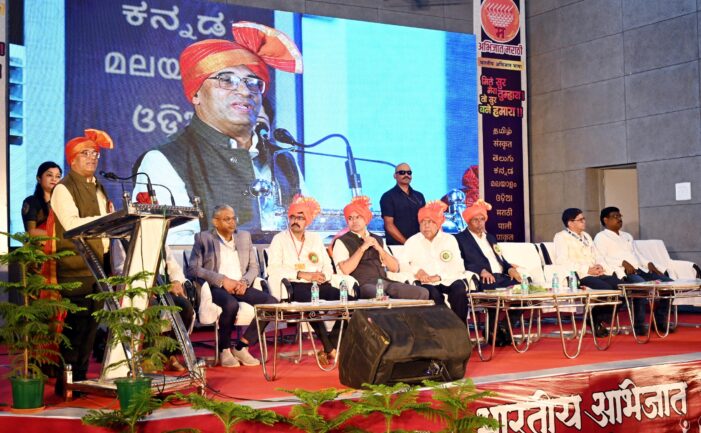
The Amravati conference stands as a landmark for India’s language policy and digital inclusion agenda, with Bhashini facilitating seamless to access speeches and discussions in the language of their choice translated real-time on the digital screens put up in the SGBA auditorium.
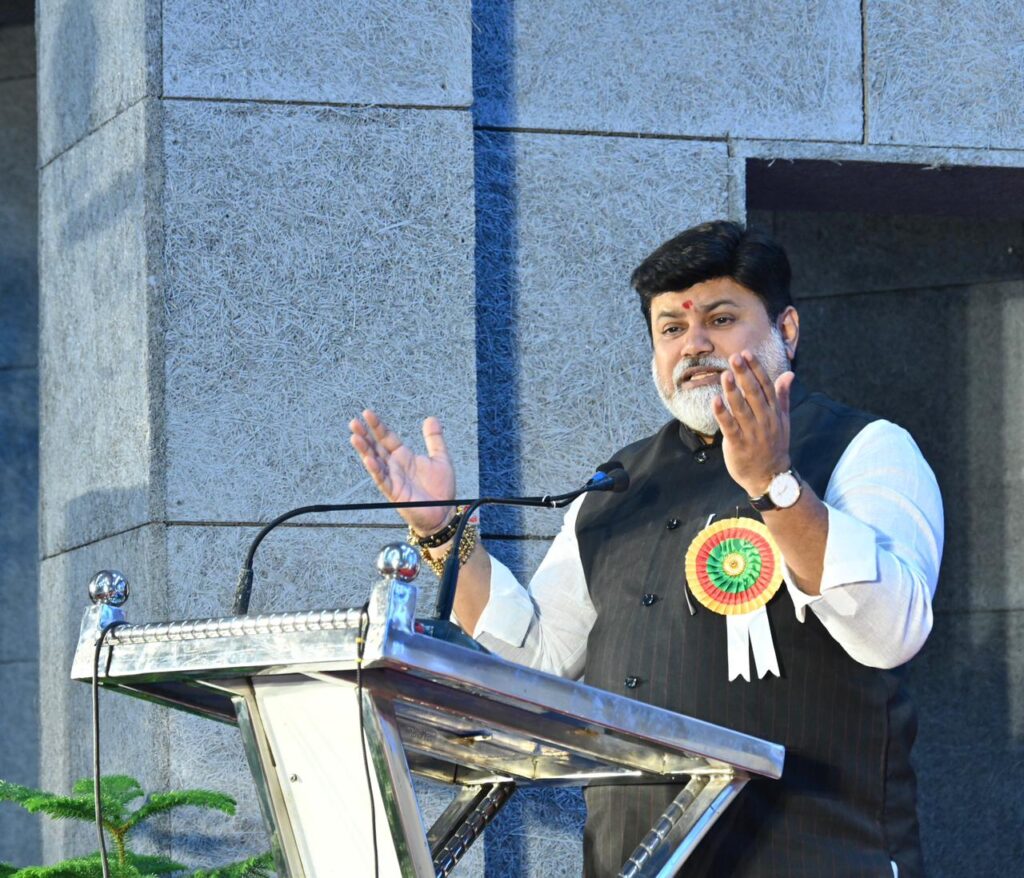
“For the first time, every classical voice found true resonance in India’s digital age. The relevance of these 11 classical languages in modern times calls for a fresh look at our classical texts, many of which transcend natural and local boundaries. Time now is to build a bridge between our rich heritage and contemporary culture and Maharashtra has taken a lead in bringing together the scholarly minds of the classical languages. The uniqueness of the conference is the application of ShrutLekh app by the Bhashini platform which has been put to use for the first time ever in a public programme. It did more than bridge language gaps—it showcased how advanced technology can break language barriers and help reach out to a multilingual audience and position India at the forefront of digital cultural innovation,’’ said Shri Uday Samant, Minister of Marathi Language, Government of Maharashtra.
The conference opened with a resplendent ‘Dindi’ procession, with rhythmic chants and vibrant flags embodying the spiritual essence of Maharashtra, with an energetic lezim performance and traditional tribal song and dance show by Melghat Adivasi community to welcome dignitaries including Shri Chandrakant (Dada) Patil, Minister for Higher and Technical Education and Parliamentary Affairs, Shri Kiran Kulkarni, Secretary, Marathi Language Department, Dr Avinash Awalgaonkar. Vice-Chancellor, Marathi Language University, Dr. Milind Barhate, Vice-Chancellor, SGBA Language scholars, who exchanged notes and brainstormed on the way ahead for the classical languages, included Dr R Bhuvaneshwari, Dr V Murgan, Dr. L. Ramamoorthy and Dr. K. Karunakaran (Tamil), Pro. Swanand Pund,Dr. Rupali Kavishwar (Sanskrit), Dr. N.M Talavar, Prof. T. S. Satyanath, Prof. M. N. Venkatesha, Dr. Hanumakshi Gogi (Kannada), Prof. M. Sampath Kumar, Dr. Dr chilukoti Kurmaiah (Telugu), Dr. Kishore Ram, Prof. Sreenathan M., Dr. Sivaprasad Ponnan (Malayalam), Prof. Basant Kumar Panda, Dr. Jatindra Kumar Nayak (Odia), Vasant Abaji Dahake, Mdhukar Ramdas Joshi, Dr Vandana Mahajan, Ramesh Warkhede, Sunila Gondhlekar , (Marathi), Prof N Suresh Kumar, Dr LokaKumar N, Dr Ramesh Shirhatti, Dr Rajendra Patil Shastri, Dr. Jwalanmma suresh (Prakrit), Prof. Ram Nakshatra Prasad, Prof. Mahesh Deokar, Prof. Vijay Kumar Jain and Dr. Raka Jain. (Pali), Dr Kavyashree Mahanta, Dr Arabinda Rajkhowa, Dr Kuldhar Saikia, Dr. Gajendra Adhikary and Dr Samudragupta Kashyap (Assamese), Prabal Kumar Basu, Manoranjan Byapari (Bengali).
Shri Kiran Kulkarni emphasized that the development of the Marathi language is the collective responsibility of language scholars and entrepreneurs. “The future of Marathi depends not just on those who study its literature, but on those who create opportunities, drive innovation. Marathi has to be the language of business and employment potential in the evolving economic landscape,” he noted.
The open exchange of thoughts and the multilingual translation by Bhashini bridged the language barriers and initiated a new era for digital multilingualism in India’s public events.
Officials from the Digital India Bhashini Division described this demonstration as a landmark step toward and a testament to India’s capability in developing indigenous AI-based linguistic technologies.
“For the first time in India, the ShrutLekh application demonstrated simultaneously on 11 different screens, each showcasing a distinct classical Indian language. This unprecedented live multilingual transcription marks a major leap in India’s efforts to integrate AI into language preservation, cultural heritage, and administrative efficiency,’’ said Sameer Patil engagement manager at Bhashini.