

ICTpost Global Technology Affairs
In the 21st century, the most powerful weapons may not be missiles, oil pipelines, or nuclear warheads. They are tiny pieces of silicon—semiconductors—that power everything from smartphones and cloud computing to artificial intelligence and modern warfare.
Today, a new geopolitical conflict is unfolding around these microchips. Governments are pouring billions into domestic semiconductor production, restricting exports, and forming strategic alliances to control the supply chain. This confrontation—often called the Global Semiconductor War—is reshaping geopolitics and redefining how nations measure power.
As historian Chris Miller, author of Chip War, famously observed: “The world runs on chips.” And whoever controls the chips increasingly controls the future.
Why Semiconductors Are the New Strategic Resource
Semiconductors are the fundamental building blocks of modern electronics. They power data centers, smartphones, satellites, weapons systems, electric vehicles, and artificial intelligence models.
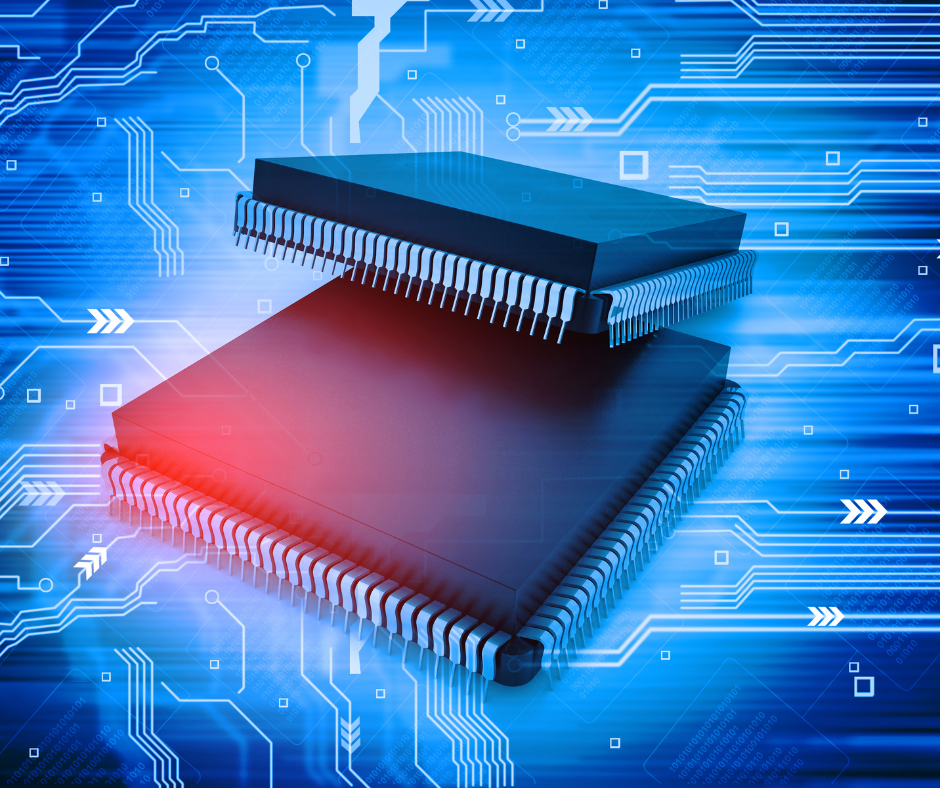
The global semiconductor market is enormous and growing rapidly. Integrated circuits alone account for more than 78% of the semiconductor industry, with Asia-Pacific dominating nearly 60% of global revenue.
But the significance of chips is not just economic—it is strategic. According to multiple policy analyses, semiconductors are now considered “strategic assets” at the center of global power competition, particularly between the United States and China.
Artificial intelligence, quantum computing, cybersecurity, and military systems all depend on advanced chips. That makes the semiconductor supply chain a critical national security concern.
The U.S.–China Technology Rivalry
At the heart of the chip war lies the intensifying technological rivalry between Washington and Beijing.
Over the past decade, the United States has imposed sweeping export controls on advanced chips and semiconductor manufacturing equipment to slow China’s technological rise.
The goal is straightforward: maintain America’s lead in computing power, AI, and military technologies.
As one policy analysis explains, these export controls are designed to “maintain or widen the U.S. lead over China in technologies with major security applications.”
But China is responding with massive investments in domestic chip manufacturing and research.
Chinese chip imports alone exceeded $400 billion annually, highlighting the country’s dependence on foreign technology. That dependence is now driving Beijing’s push for semiconductor self-sufficiency, with billions in subsidies, national industrial strategies, and state-backed companies.
The result is a technological arms race.
The Global Supply Chain: A Fragile Web
Unlike oil or rare earth minerals, semiconductor production is extraordinarily complex.
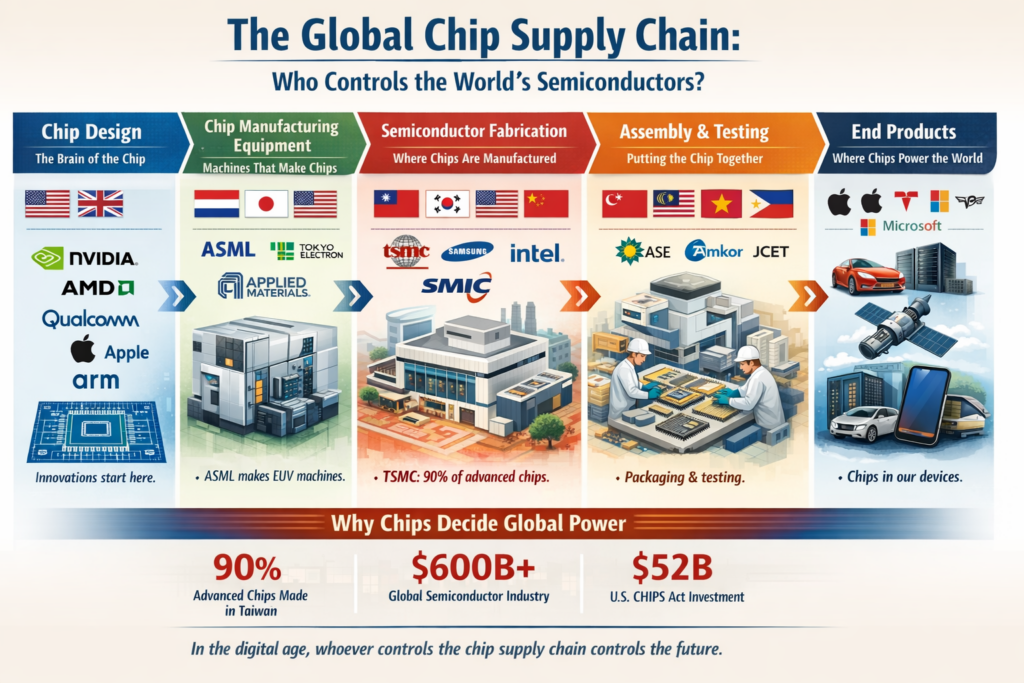
A single chip may involve design in the United States, manufacturing in Taiwan, equipment from the Netherlands, materials from Japan, and assembly in Southeast Asia.
Experts describe the semiconductor ecosystem as one of the most interdependent global supply chains ever created.
A few companies control critical choke points.
For example: ASML in the Netherlands produces the world’s only extreme ultraviolet (EUV) lithography machines, which are essential for manufacturing advanced chips.
Taiwan Semiconductor Manufacturing Company (TSMC) produces about 90% of the world’s most advanced chips.
This concentration of capability has turned certain companies—and certain locations—into strategic assets. Nowhere is this more visible than Taiwan.
Taiwan: The Silicon Shield
Taiwan sits at the center of the semiconductor universe. Its dominance in advanced chip manufacturing has made it indispensable to global technology companies—and strategically critical to geopolitics. TSMC’s near monopoly in cutting-edge chips means that any disruption in Taiwan could cripple the global technology economy.
Some analysts call this phenomenon the “Silicon Shield.” The idea is simple: Taiwan’s semiconductor leadership acts as a geopolitical deterrent. Any military conflict around the island would disrupt the global economy on a massive scale.
This is one reason tensions in the Taiwan Strait attract intense global attention.
Chips as Economic Weapons
In earlier eras, geopolitics revolved around military alliances and energy resources. Today, governments are increasingly weaponizing technology supply chains.
The semiconductor industry has become a prime example of what scholars call “economic statecraft.”
Countries now use sanctions, tariffs, export controls, and subsidies to influence technological competition.
The United States passed the CHIPS and Science Act, allocating tens of billions of dollars to rebuild domestic semiconductor manufacturing. The European Union launched its own EU Chips Act, aiming to reduce dependence on foreign suppliers and achieve technological sovereignty.
The AI Revolution Intensifies the Chip War
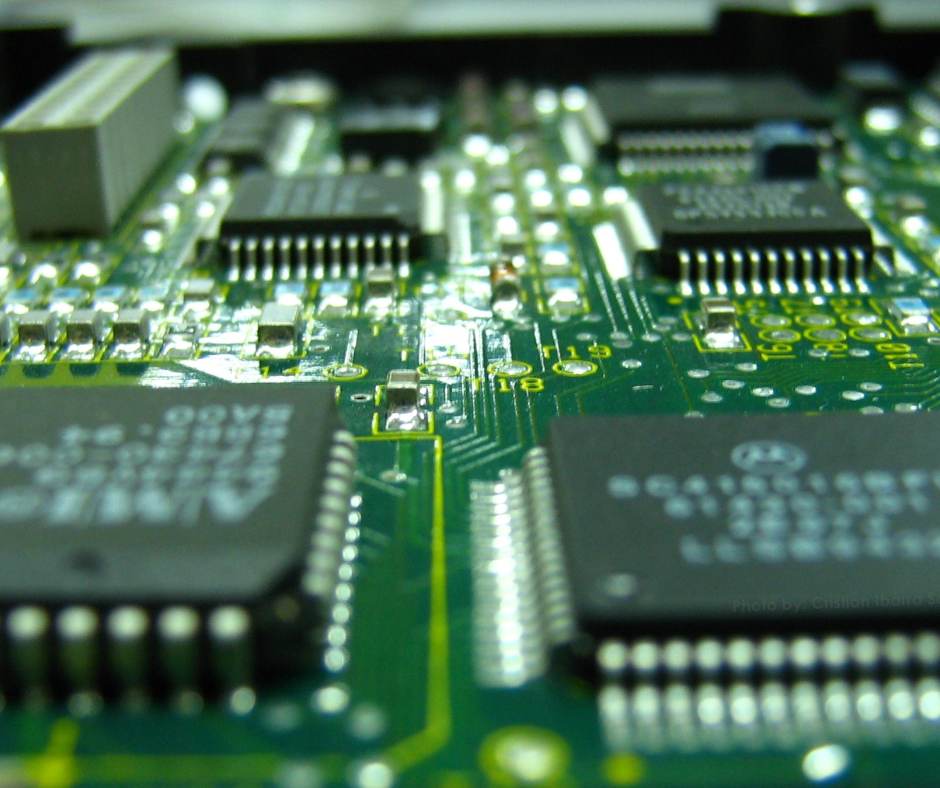
The semiconductor war is also fueled by the rapid rise of artificial intelligence. Training large AI models requires enormous computing power—and that means advanced chips.
Companies like Nvidia have become central players in this new geopolitical landscape. In fact, the strategic importance of AI chips has led some experts to compare them with nuclear technology.
At the World Economic Forum in Davos, Anthropic CEO Dario Amodei warned: “Selling AI chips to China is like selling nuclear weapons.” Such statements highlight how computing power is now seen as a strategic resource with military implications.
The AI revolution is therefore intensifying the competition for semiconductor dominance.
The Risk of a Fragmented Tech World
One of the biggest consequences of the chip war may be the fragmentation of the global technology ecosystem.
Some analysts warn that the world could split into two competing technology blocs—one centered around the United States and its allies, and another around China.
This emerging divide is sometimes described as an “AI Cold War.” If that happens, global supply chains could become less efficient, innovation could slow, and technology standards could diverge.
But the rivalry could also accelerate technological breakthroughs as countries compete to innovate faster.
Where India Fits In
For countries like India, the semiconductor war presents both challenges and opportunities. On one hand, the global competition for chips exposes vulnerabilities in supply chains.
On the other hand, it opens a strategic window for emerging economies to build domestic semiconductor capabilities. India’s semiconductor mission aims to create a local ecosystem for chip manufacturing, design, and packaging.
If successful, India could become an important node in the evolving global chip architecture.
The New Measure of Power
Throughout history, global power has been defined by control over critical resources.
In the 19th century it was coal. In the 20th century it was oil.
In the 21st century, it may well be semiconductors.
As the geopolitical rivalry intensifies, microchips are becoming the foundation of national security, economic competitiveness, and technological leadership.
The global semiconductor war is therefore not just about electronics.
It is about who shapes the future of artificial intelligence, digital infrastructure, and the global economy itself.
In the words of technology strategist Chris Miller: “Advanced computing power is the foundation of modern military and economic strength.”
And that foundation, increasingly, is built on silicon. editor@ictpost.com