
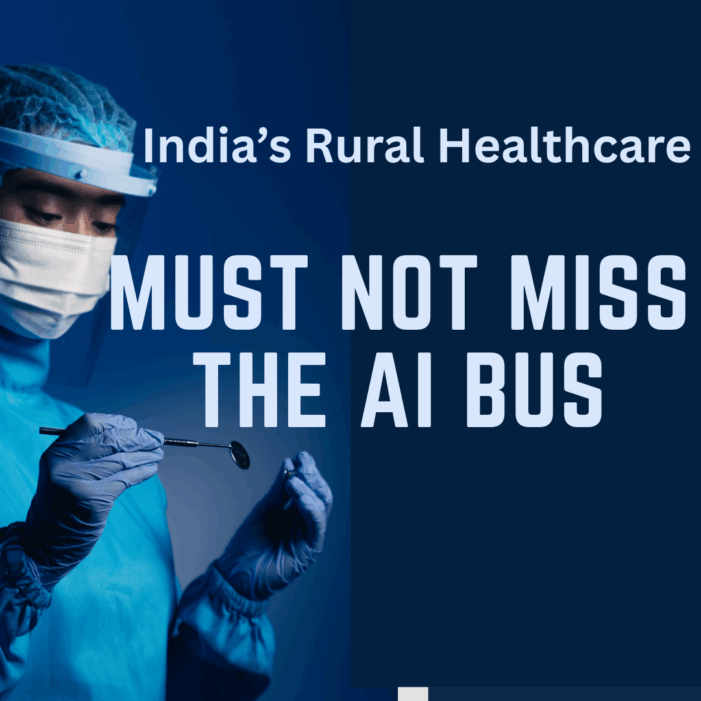
Artificial Intelligence (AI) is rewriting the script of modern medicine — from diagnostics to drug discovery, from personalized care to predictive analytics. But in a country like India, where 65% of the population lives in rural areas and medical resources are unevenly distributed, the greatest question isn’t how powerful AI can be, but whether that power will reach where it’s needed most.
As the world marches toward a tech-driven healthcare future, the risk is not that rural India will lag a few steps behind — but that it may be left out entirely.
AI in Healthcare: Promise Meets Inequity
Globally, healthcare systems are being reimagined with AI at their core. Algorithms can now detect diabetic retinopathy, identify early cancerous lesions, and predict heart attacks before a patient feels a twinge. But these breakthroughs are most often trialed and scaled in urban hospitals, private clinics, or research hubs with robust infrastructure.
India’s rural and underserved areas — where one doctor may serve a population of 10,000 or more, and where electronic health records (EHRs) are virtually non-existent — remain at the margins of this revolution.
The AI transformation in healthcare must prioritize these communities, not as an afterthought, but as a foundation. Because innovation that does not include everyone is not just incomplete — it’s unjust.
Why Rural India Needs AI – and Why AI Needs Rural India
There’s a paradox at the heart of AI in healthcare. The areas with the greatest medical need — rural districts in Jharkhand, tribal belts in Odisha, desert hamlets in Rajasthan — also hold the richest, most diverse, and most challenging datasets. From untreated chronic diseases to cultural variations in care-seeking behavior, from high infant mortality to anemia among women, rural India provides both the reason and the reality check for AI models.
Without integrating real-world data from these settings, AI models will be trained on incomplete truths, resulting in tools that fail or even harm when used outside elite hospitals. AI doesn’t just need data — it needs representative data, validated in local contexts.
Moreover, rural communities in India, like their counterparts globally, suffer from the “digital infrastructure gap.” Many Community Health Centres (CHCs) and Primary Health Centres (PHCs) still use paper records. Without modern EHR systems that allow seamless data exchange, AI cannot function.
The Three Pillars: EHR, Trust, and Local Governance
To make AI truly inclusive, three urgent steps must be taken:
- Digitize the last mile: Funding and support must be directed toward deploying certified EHR systems across rural India, with easy-to-use interfaces in regional languages. These systems must integrate with India’s Ayushman Bharat Digital Mission and ABDM Health IDs to ensure continuity of care. ABDM (Ayushman Bharat Digital Mission) Health ID, now called ABHA (Ayushman Bharat Health Account), is the digital backbone of India’s inclusive healthcare revolution. It empowers AI-driven innovation by enabling secure, standardized, and interoperable health records for every citizen.
- Build trust in AI: Trust is not given; it must be earned. Rural doctors and community health workers need AI tools that are transparent, explainable, and interpretable, not black-box models. AI must not replace clinical judgment — it must amplify it.
- Empower local governance: AI model management must be decentralized. State health missions, district hospitals, and even gram panchayats must be involved in validating and governing AI tools, with localized training and deployment.
From Jugaad to Justice: The Indian Way Forward
India has the opportunity — and the obligation — to design a blueprint for ethical, inclusive AI in healthcare that the world can learn from. This means leveraging its unique network of Accredited Social Health Activists (ASHAs), Village-Level Entrepreneurs (VLEs) through CSCs, and telemedicine kiosks to deploy AI where it can matter most.
Imagine an AI model trained on hypertension patterns in Bundelkhand, predicting strokes in time to send alerts to ASHAs’ mobile phones. Or a tuberculosis-detection AI app running offline in the hinterlands of Chhattisgarh. Or CSCs doubling up as local AI health hubs — diagnosing skin conditions or triaging eye disorders through smart cameras connected to cloud-based AI.
These are not sci-fi dreams. They are possible, if India commits to making AI a tool for health equity.
What Healthcare Leaders Must Do
As India gears up for Digital Health 2.0, including at forums like HIMSS India or global health tech expos, the key message must be: AI should not deepen divides. It must bridge them.
Healthcare leaders — from NITI Aayog to state health departments, from private hospital chains to health tech startups — must prioritize inclusion in innovation. This means not just speaking about “Bharat” but building with Bharat.
Cross-sector partnerships, public funding, grassroots pilots, and open-source AI tools tailored for Indian needs will be critical.
A Shared Future
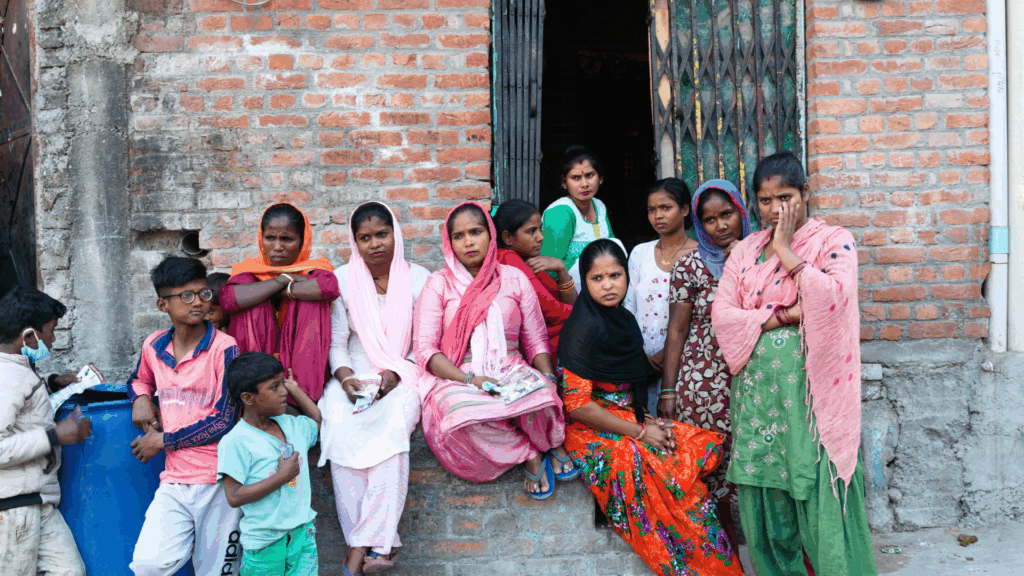
In the AI era, the health of a farmer in Vidarbha, a pregnant woman in Manipur, or an elderly villager in Bihar should matter as much as that of an urban executive in Delhi or a patient in a private hospital in Bengaluru. Not just morally, but strategically.
Because when the most complex, under-resourced, and often neglected areas are included in the AI loop, it leads to stronger, smarter, and more sustainable solutions — for everyone.
The AI revolution in Indian healthcare is coming. The question is not whether we will build it.
The question is whether we will build it for all.
ICTpost remains committed to highlighting stories and strategies at the intersection of technology, inclusion, and health innovation in India. editor@ictpost.com